Новини от Велико Търново и регионаNews from Veliko Tarnovo and the region
Новини от Велико Търново и регионаNews from Veliko Tarnovo and the region
Пробна аудиоемисияTrial audio bulletin
2 ноември 2026 · 1:15 · Български · ИИ глас2 November 2026 · 1:15 · Bulgarian · AI voice
Седем новини от деня. Глас: Милена.Seven news stories of the day. Voice: Milena.
Пробна аудиоемисияTrial audio bulletin
2 ноември 2026 · 1:15 · Български · ИИ глас2 November 2026 · 1:15 · Bulgarian · AI voice
Седем новини от деня. Глас: Милена.Seven news stories of the day. Voice: Milena.
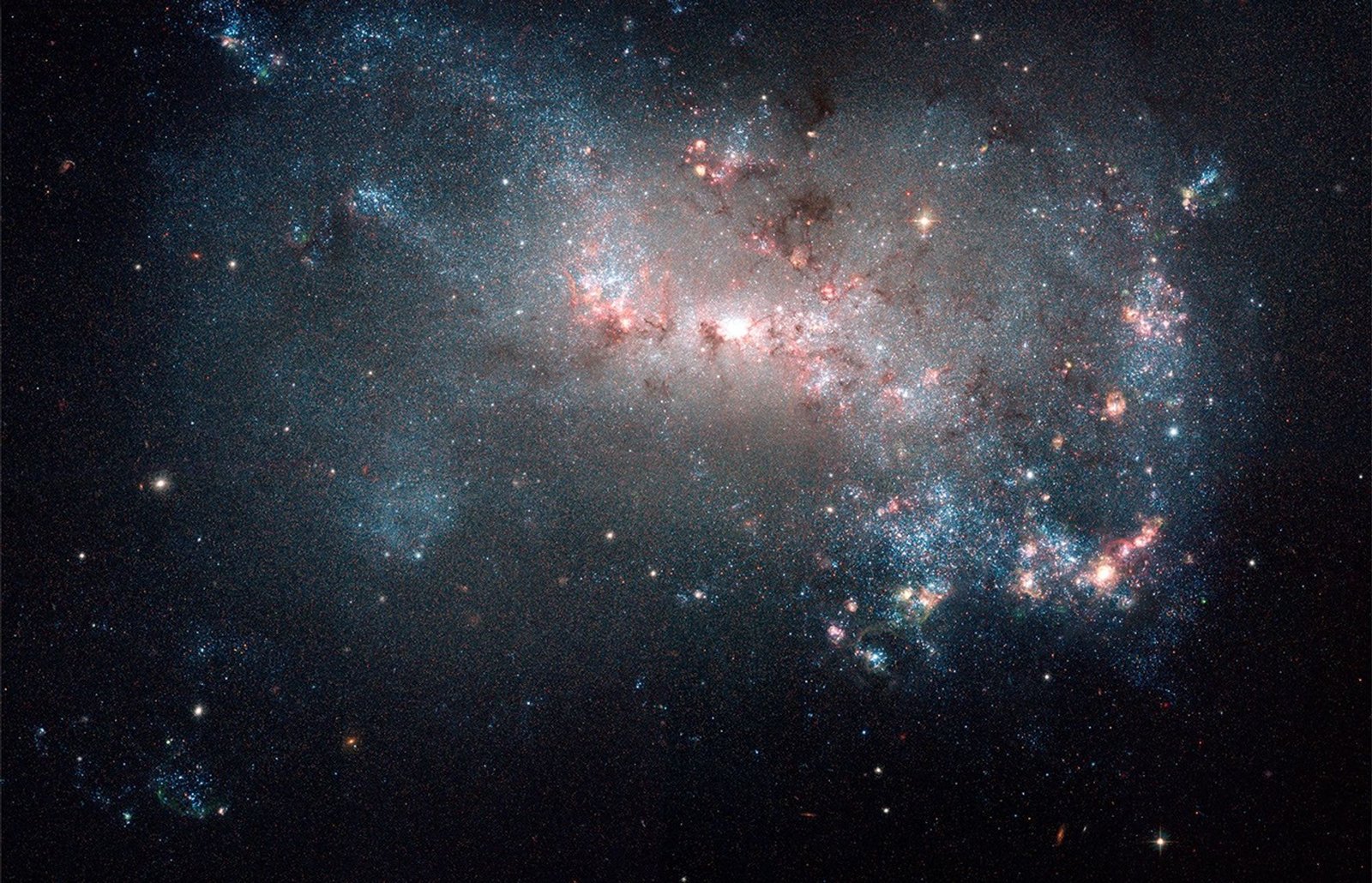
NASA has presented research into 37 nearby dwarf galaxies: stellar winds and supernovae may expel more oxygen than previously thought.
A study using the Hubble Space Telescope has found that 37 nearby dwarf galaxies retained much less oxygen than existing models predict. NASA presented the findings on 2 November 2026, and the study was published in the scientific journal The Astrophysical Journal.
Oxygen forms inside stars and is a useful indicator for tracing chemical elements in galaxies. The GLOW team compared the star-formation histories and observed oxygen content of 37 relatively nearby dwarf galaxies.
The data suggest that powerful stellar winds and supernova explosions probably push much of the oxygen produced beyond the galaxies. This process appears to be more effective than existing simulations assumed. Researchers are still investigating whether the missing oxygen remains in diffuse gas surrounding these galaxies or travels farther into intergalactic space.
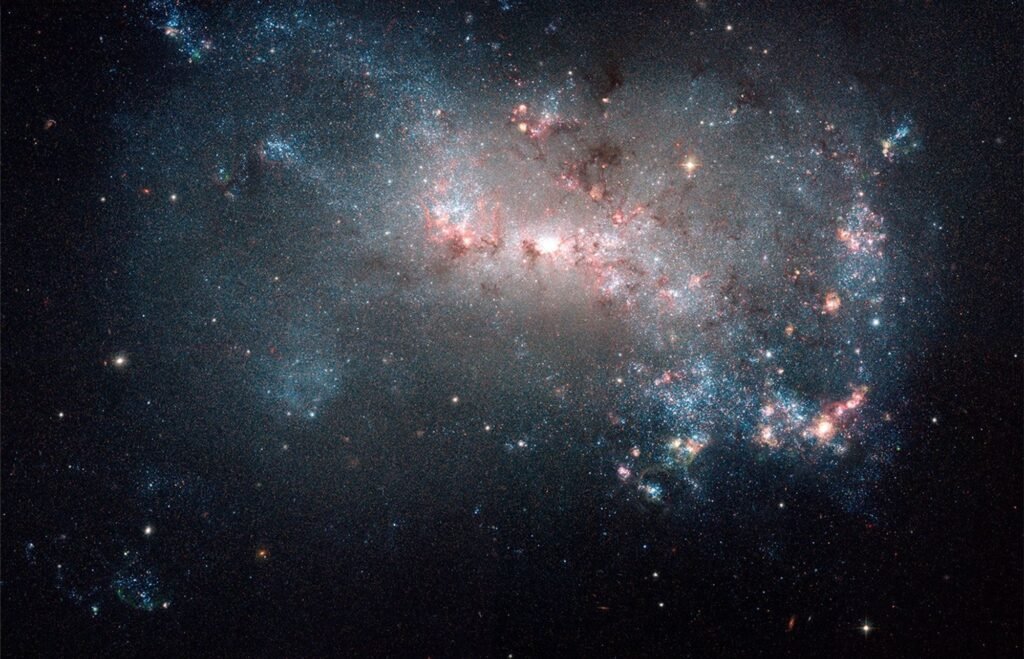
The researchers used archived Hubble observations, data from the retired Spitzer mission, and ground-based radio telescopes. The published image shows NGC 4449, a galaxy about 12 million light-years away and one of the objects studied.
The findings could improve models of dwarf galaxy evolution and help explain how these galaxies enrich the space between galaxies with chemical elements.
Image: NASA, ESA, Hubble Heritage–ESA/Hubble Collaboration, Alessandra Aloisi (STScI, ESA). Object: NGC 4449. Official image released by NASA on 2 November 2026.
Sources: NASA Science, 2 November 2026; NASA Science — image and data on NGC 4449.