Новини от Велико Търново и регионаNews from Veliko Tarnovo and the region
Новини от Велико Търново и регионаNews from Veliko Tarnovo and the region
Пробна аудиоемисияTrial audio bulletin
31 октомври 2026 · 1:15 · Български · ИИ глас31 October 2026 · 1:15 · Bulgarian · AI voice
Седем новини от деня. Глас: Милена.Seven news stories of the day. Voice: Milena.
Пробна аудиоемисияTrial audio bulletin
31 октомври 2026 · 1:15 · Български · ИИ глас31 October 2026 · 1:15 · Bulgarian · AI voice
Седем новини от деня. Глас: Милена.Seven news stories of the day. Voice: Milena.
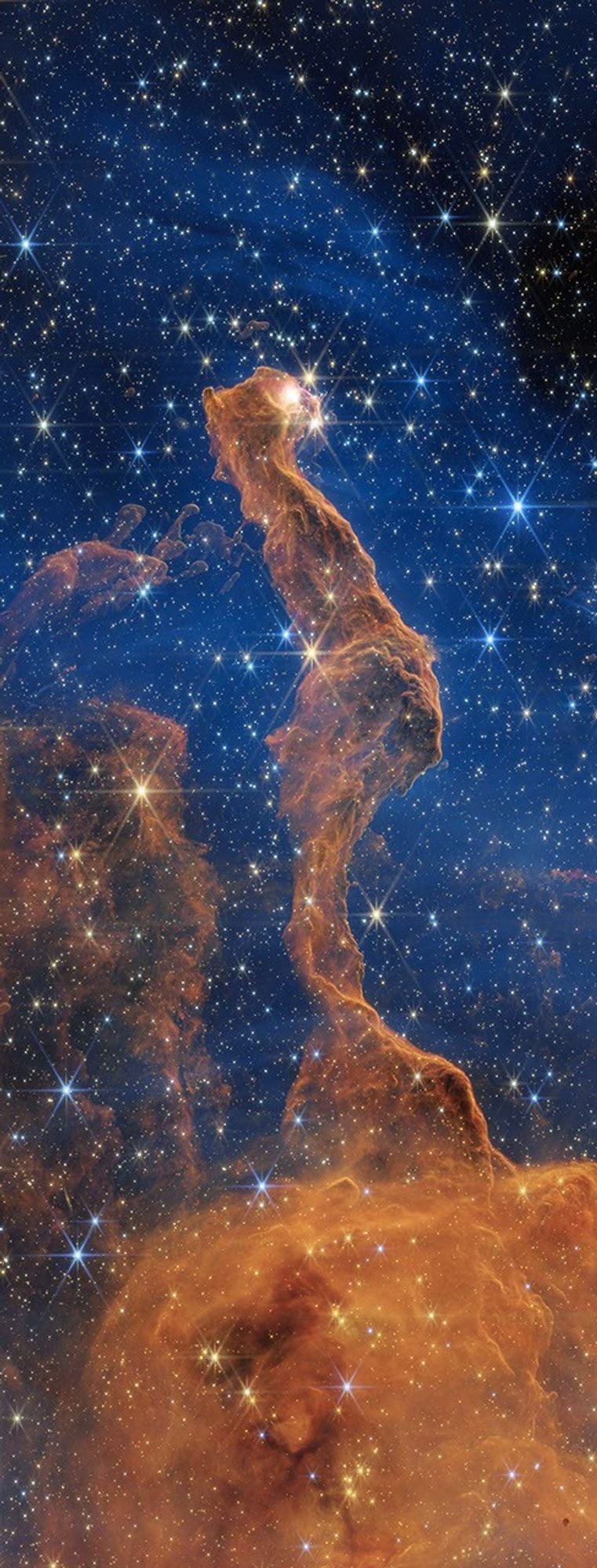
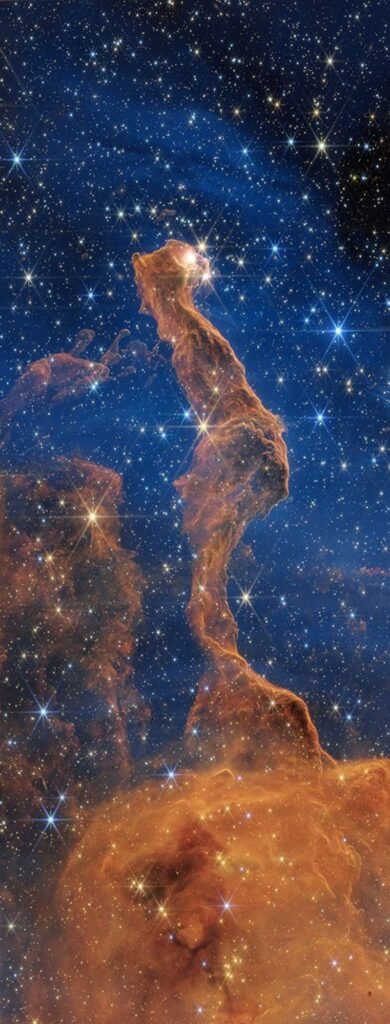
NASA has released new images of the Cat's Head Nebula in the Carina region. Comparing observations from Hubble and Webb reveals how stars are formed.
Astronomers have released new images of a strangely shaped nebula resembling a cat with its head turned to one side. It lies in the vast Carina star-forming region, around 7,500–8,500 light-years from Earth, NASA reported on 29–30 October 2026.
The region has been nicknamed the Cat's Head Nebula because a tall column of gas and dust looks like the outline of a cat. In near-infrared light captured by the James Webb Space Telescope, numerous stars and a bright eye-like feature become visible. Scientists say the glow may come from a young star still hidden in dust.
The Hubble and Webb space telescopes observe the same region at different wavelengths. Comparing their data shows how ultraviolet radiation and stellar winds reshape the surrounding clouds while denser portions are able to resist erosion for longer.
NASA explains that these observations help astronomers study how stars are born. The pictures do not show an actual cat or a solid object, but enormous structures made of gas and cosmic dust. Webb collected these observations in May, and the images were released publicly in late October.
The observations include data from NIRCam and MIRI, which reveal different details. The published image colours are representative: measurements from various filters are assigned colours so the structures can be seen by the human eye.
Sources: NASA Science — Hubble and Webb, 29 October 2026; NASA — description of the original image and scientific data; NASA — image captured with MIRI.
Image: NASA, ESA, CSA, STScI; processing by Joseph DePasquale (STScI). Original James Webb Space Telescope observation (NIRCam), not an illustration.